Healthcare
OVIDIUS CLINICAL HOSPITAL
- Project type
- NEW UNIT CONSTRUCTUON EXISTING HOSPITAL
- Surface
- 6500 SQM
- Location
- OVIDIUS, CONSTANTA, ROMANIA
- Year
- 2021
Ovidius Clinical Hospital was conceived as a contemporary healthcare facility that combines advanced medical infrastructure with a patient-centered architectural approach. The project integrates highly specialized medical functions with a calm, welcoming and human-oriented environment, redefining the traditional perception of hospital spaces through architecture, natural light and carefully selected materials.
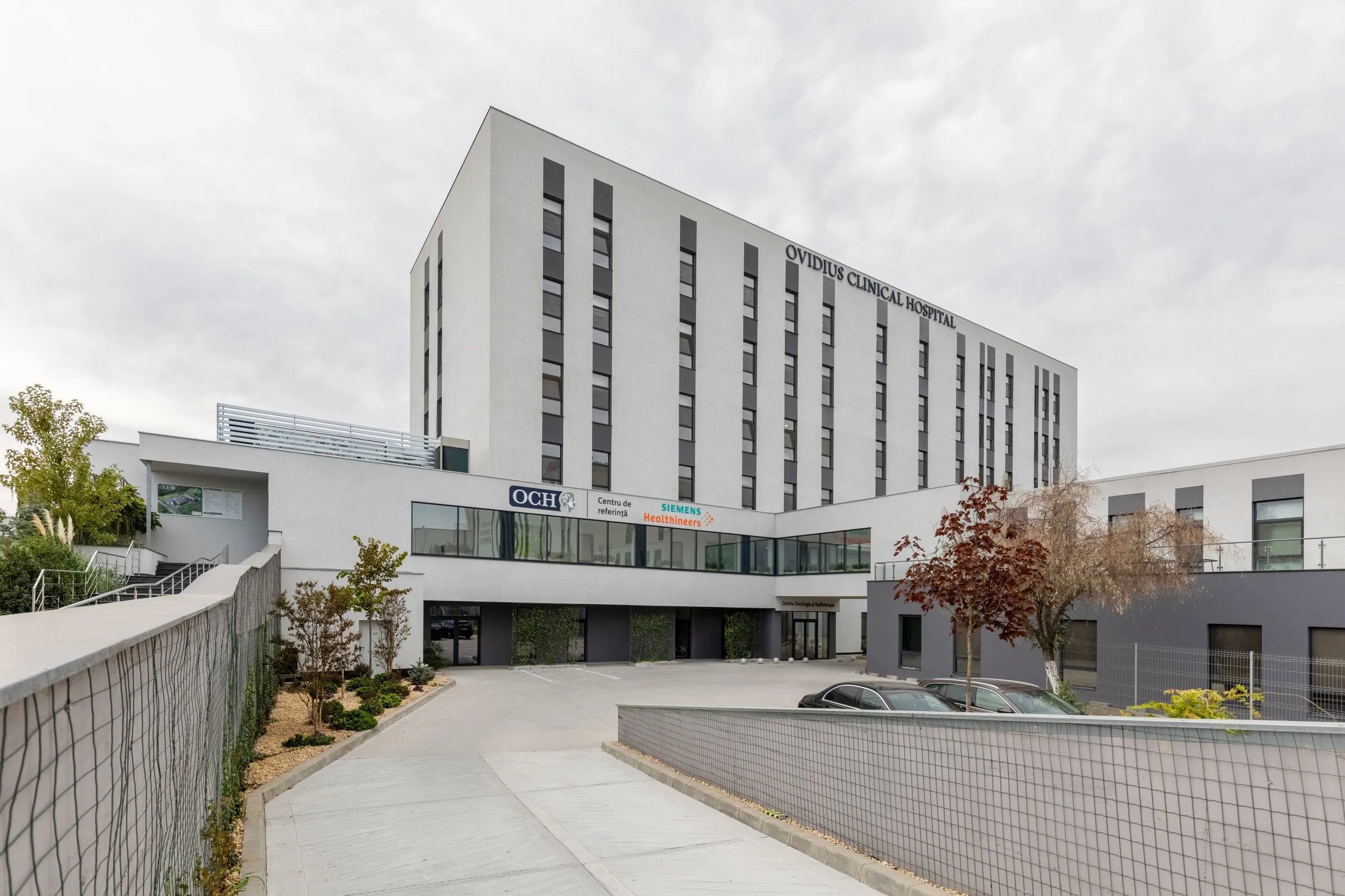
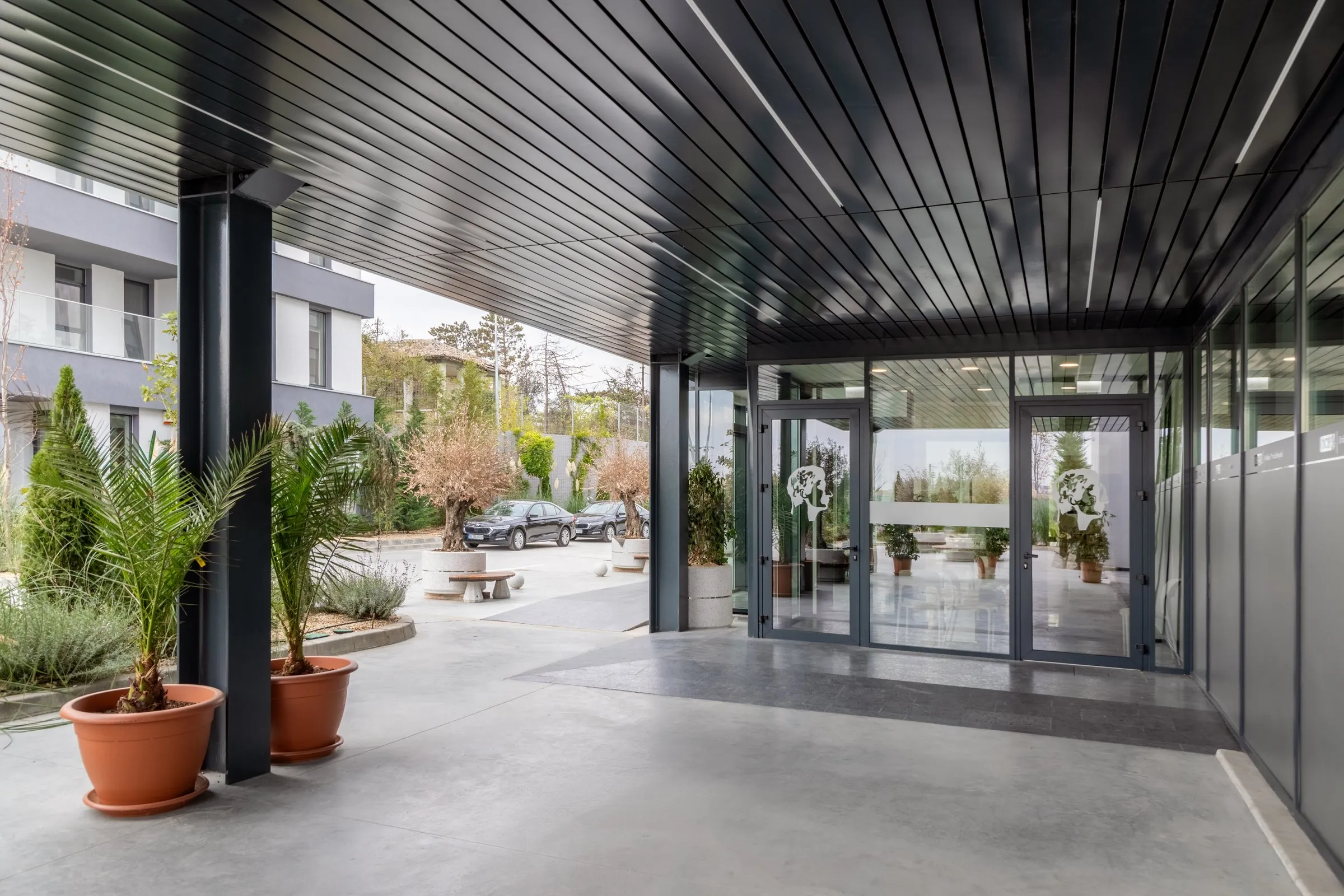
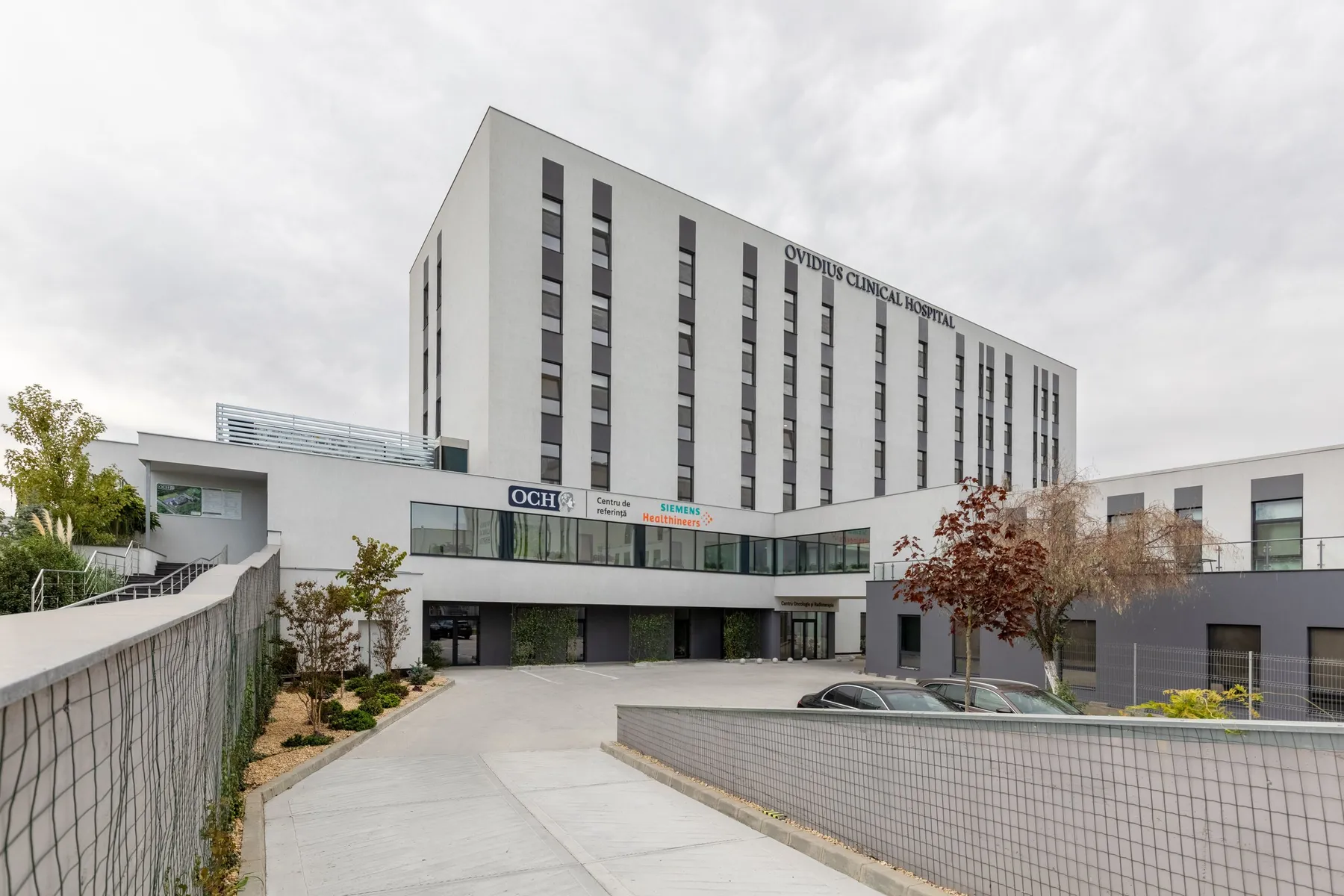
From an architectural perspective, the building presents a clean and contemporary volumetry, defined by simple geometric forms, large glazed surfaces and a restrained material palette. The exterior design emphasizes clarity, accessibility and functionality, while maintaining an elegant and professional identity. The façade composition balances solid white volumes with vertical window rhythms and transparent ground-floor areas, creating a strong visual connection between interior spaces and the surrounding landscape. The entrance sequence and exterior circulation are designed to ensure intuitive orientation, efficient access and a clear separation between public, medical and technical flows.
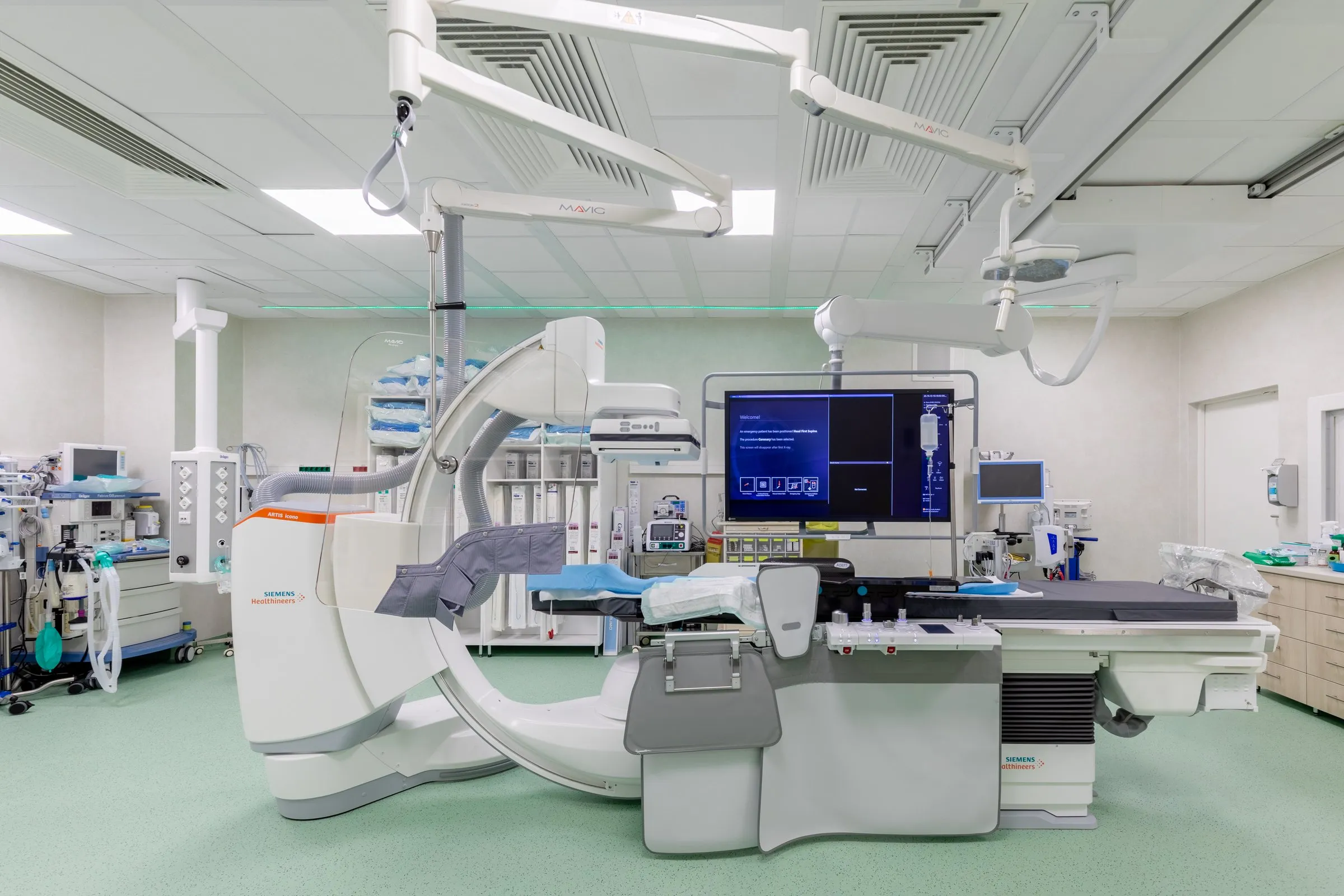
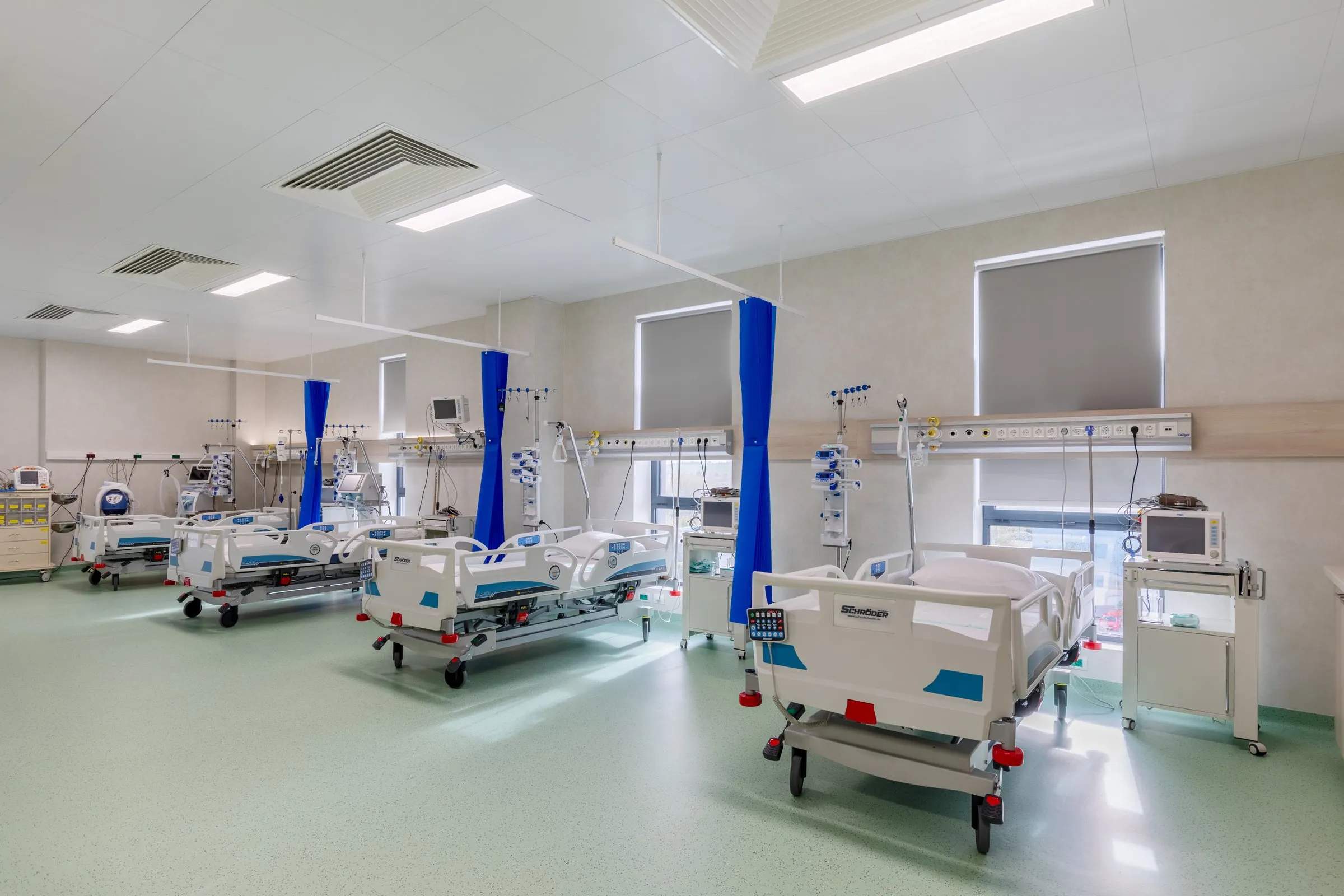
The hospital integrates complex medical functions, including diagnostic imaging, intensive care, inpatient units, operating and intervention areas, treatment rooms and public reception spaces. Functional planning was developed with a strong focus on operational efficiency, medical workflow optimization and patient comfort. Circulation routes for patients, medical staff and technical services are clearly organized, ensuring both efficiency and compliance with healthcare standards.
Inside, the project moves away from the conventional sterile hospital atmosphere and instead creates spaces that feel calm, bright and reassuring. The interior design concept is based on the integration of natural references, soft textures and warm neutral tones in order to reduce stress and improve the overall patient experience.
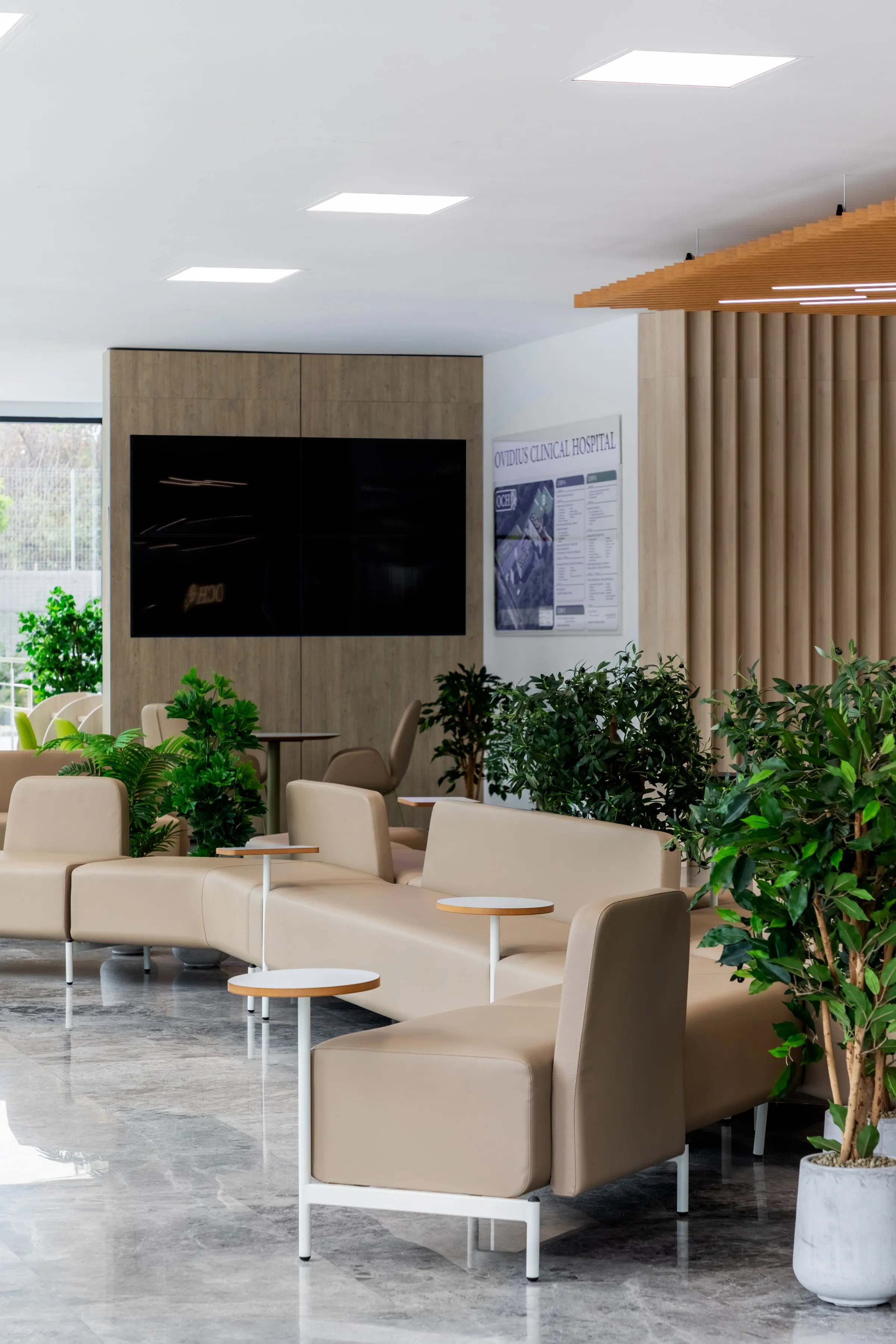
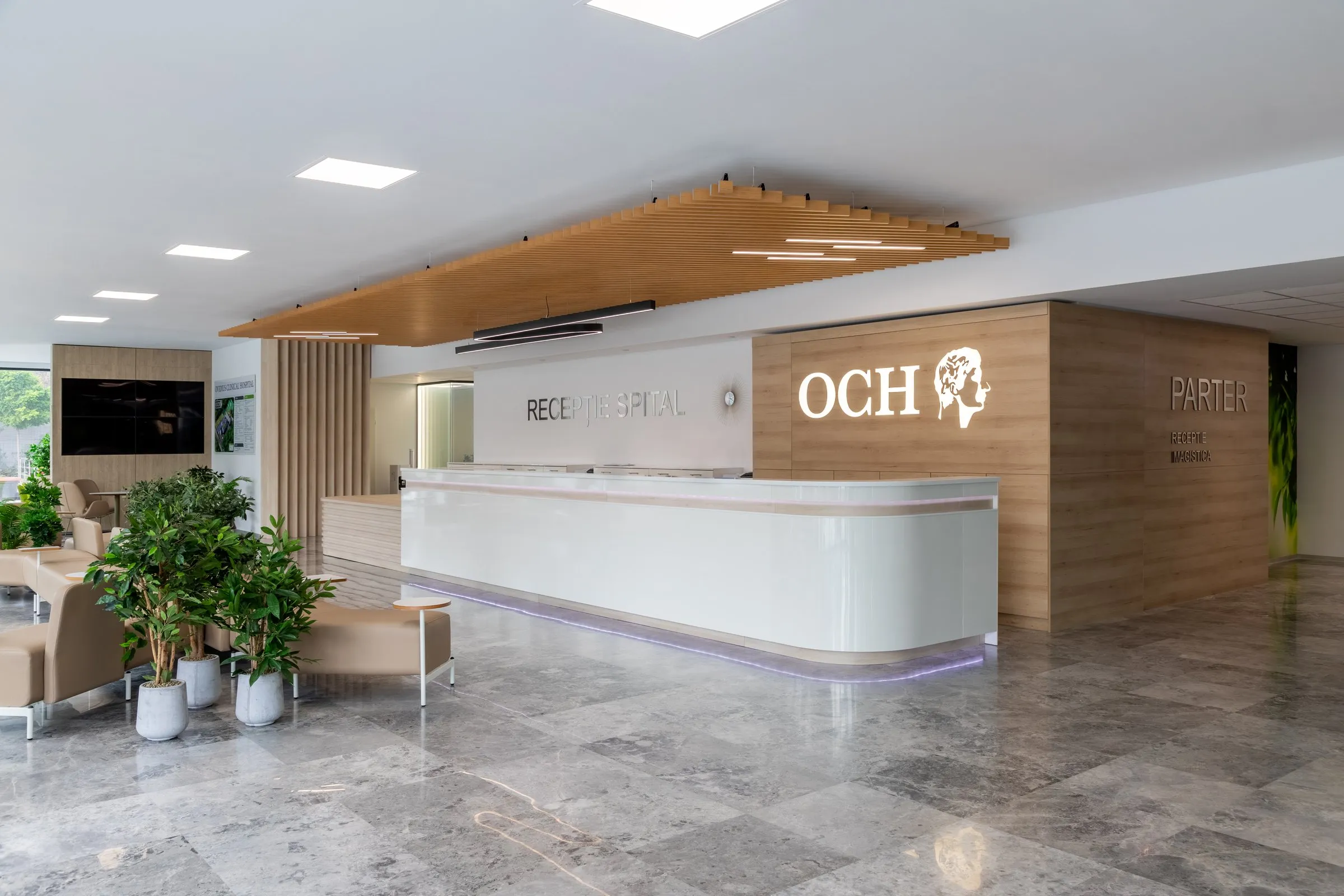
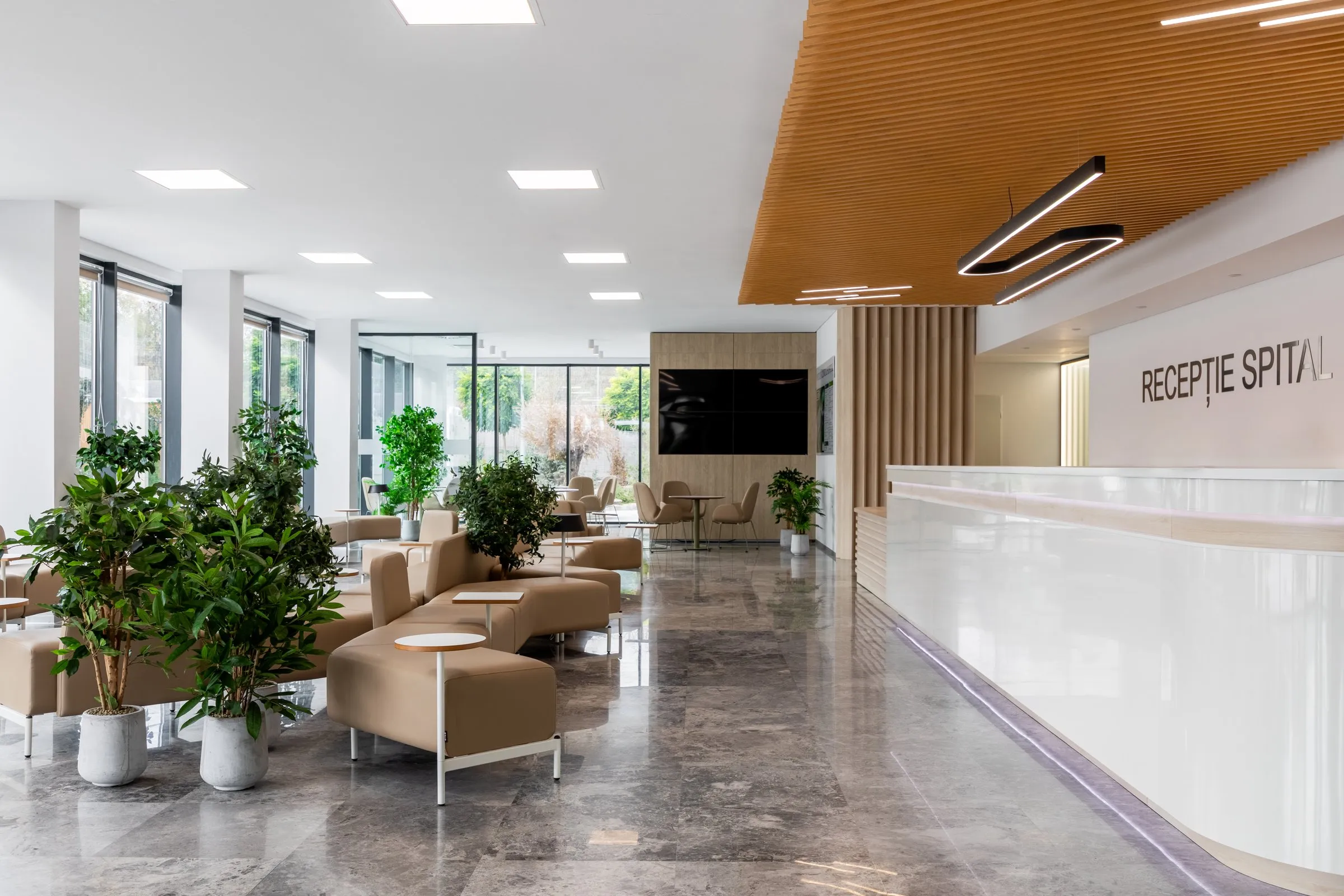
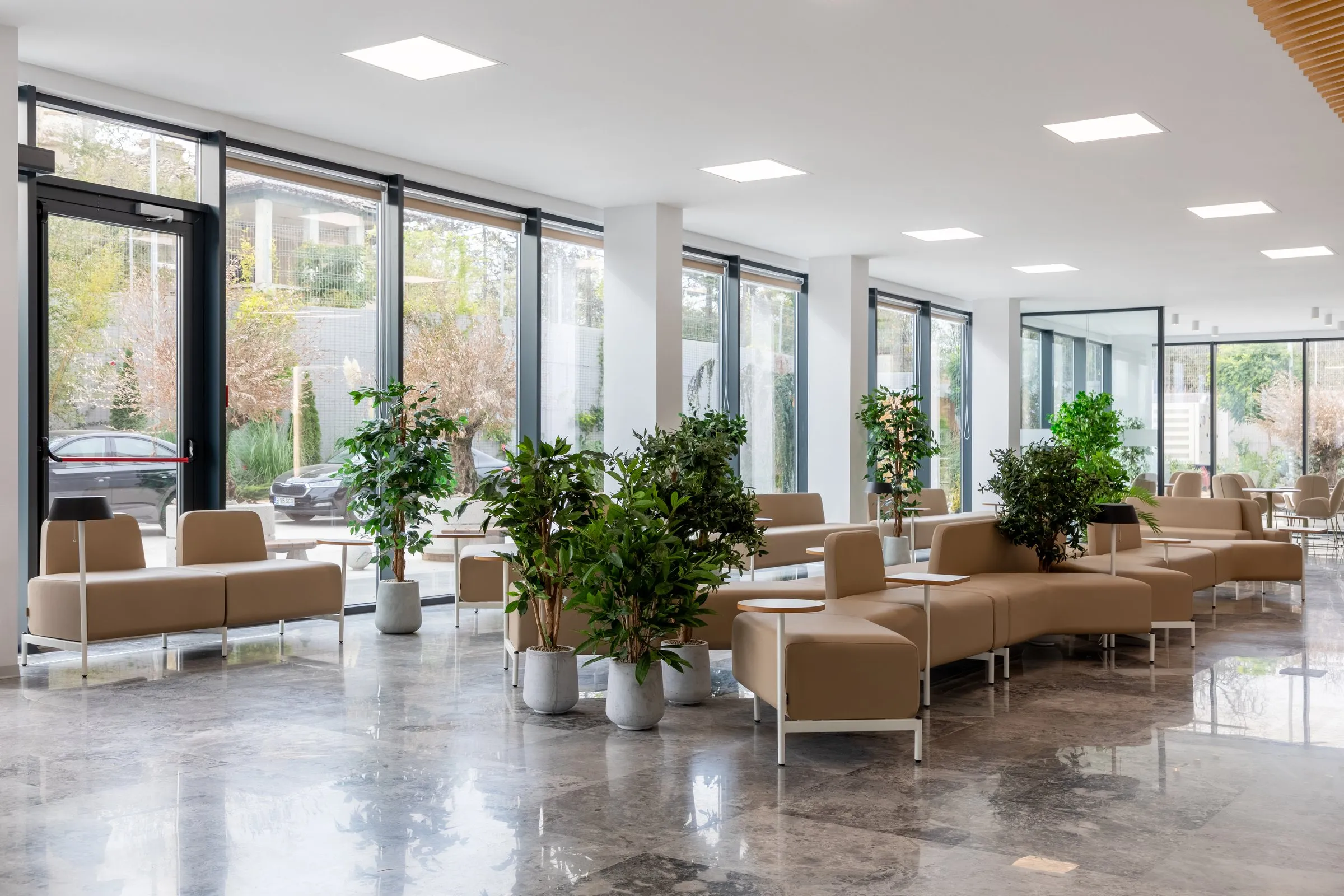
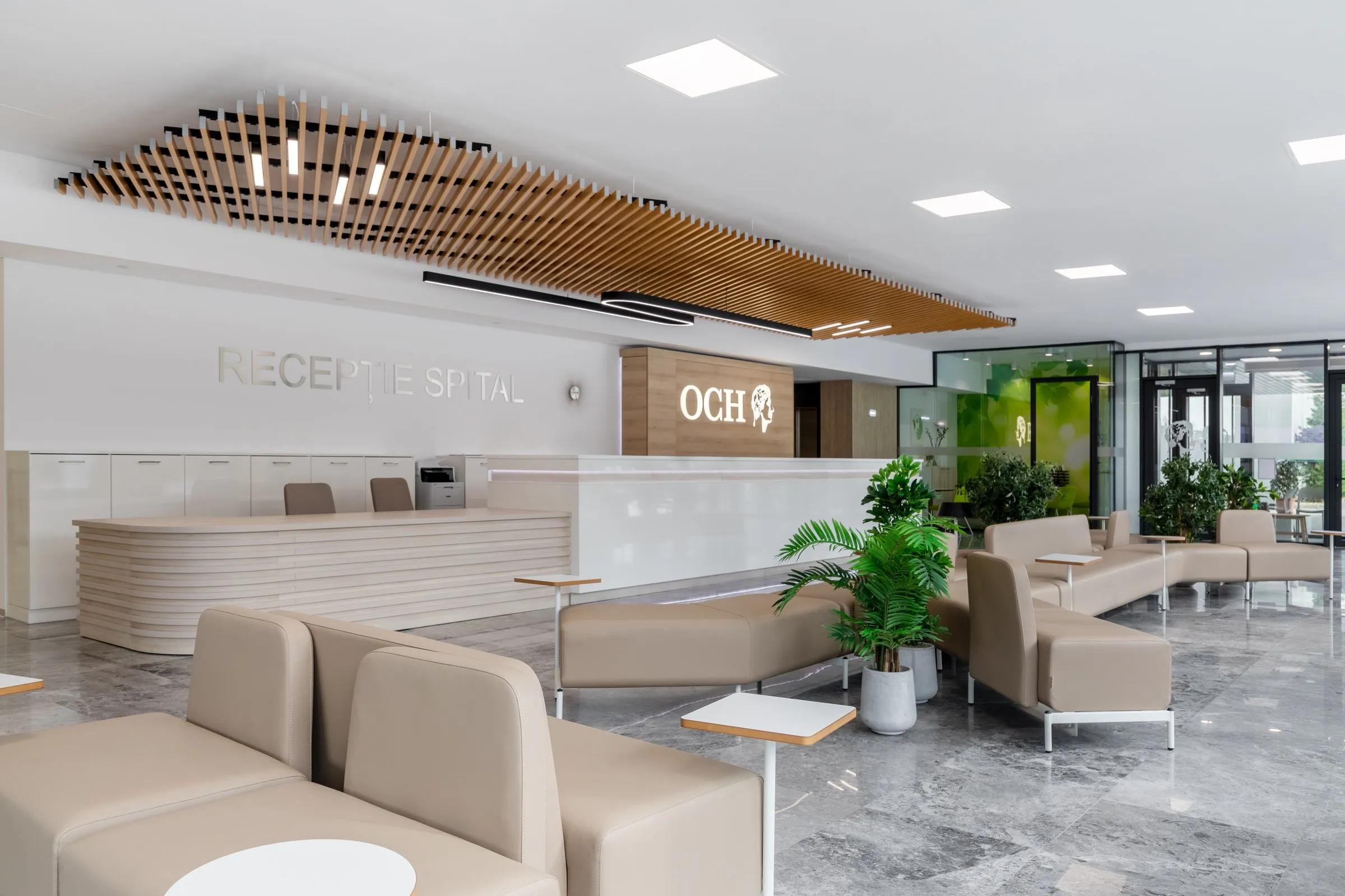
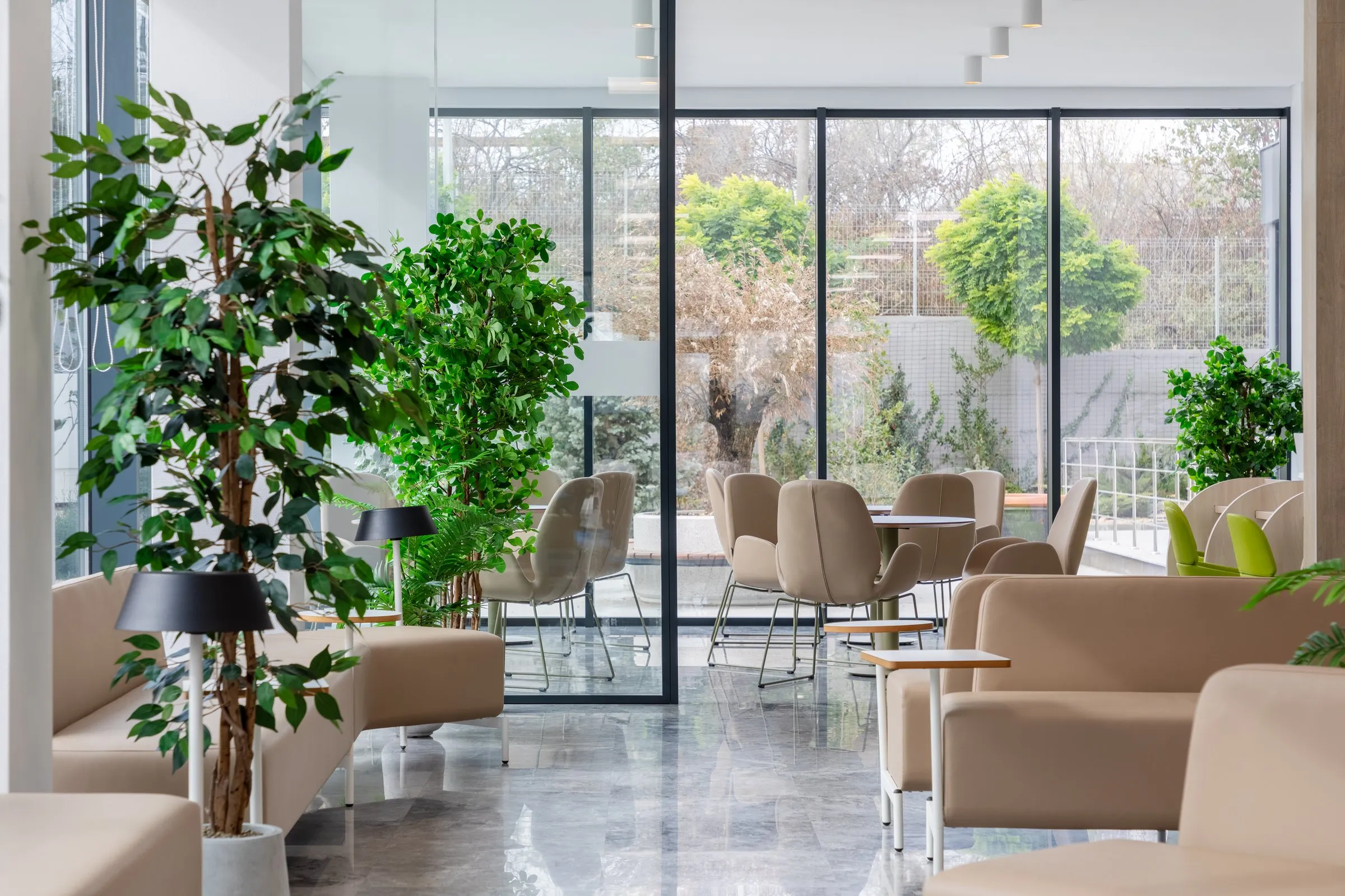
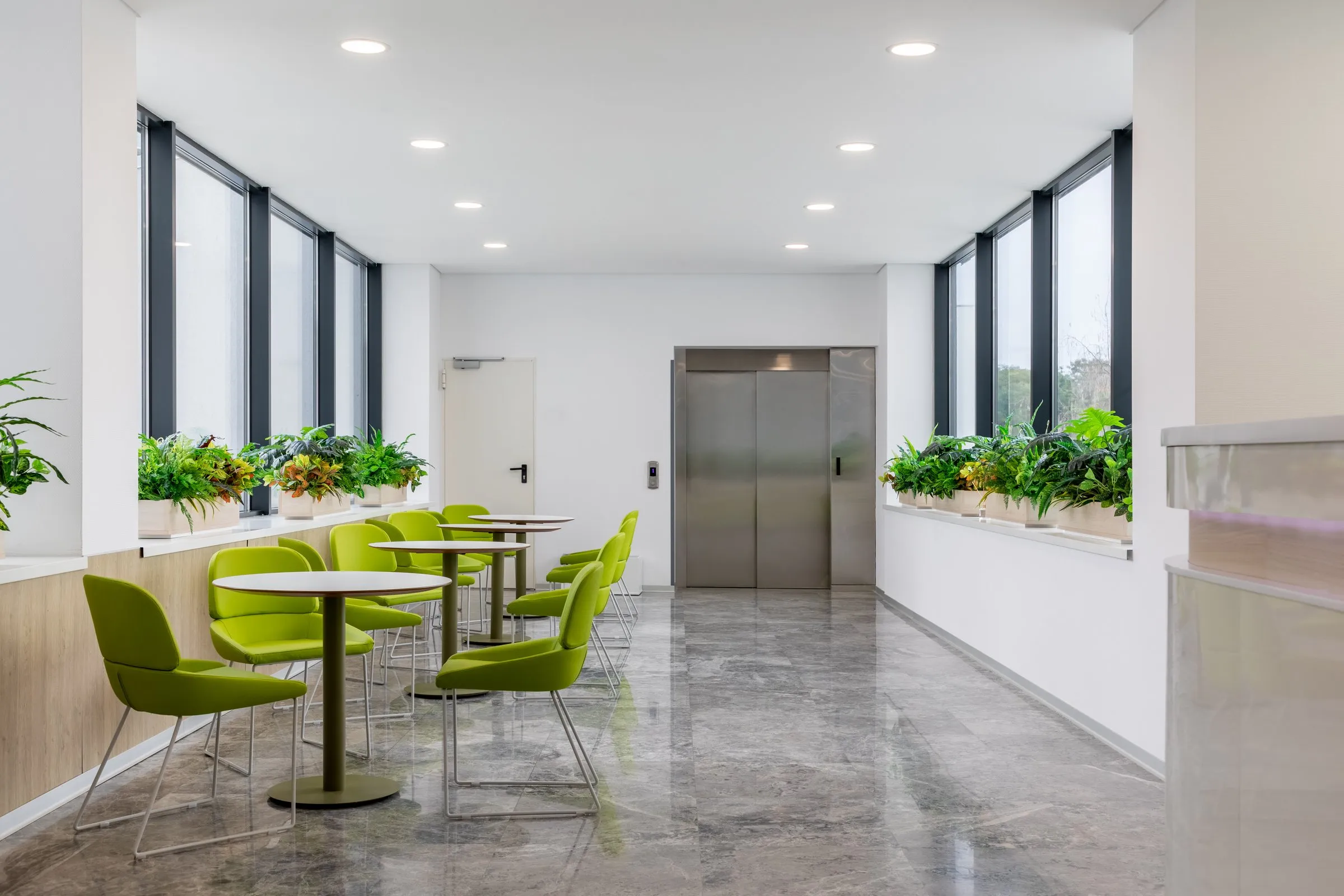
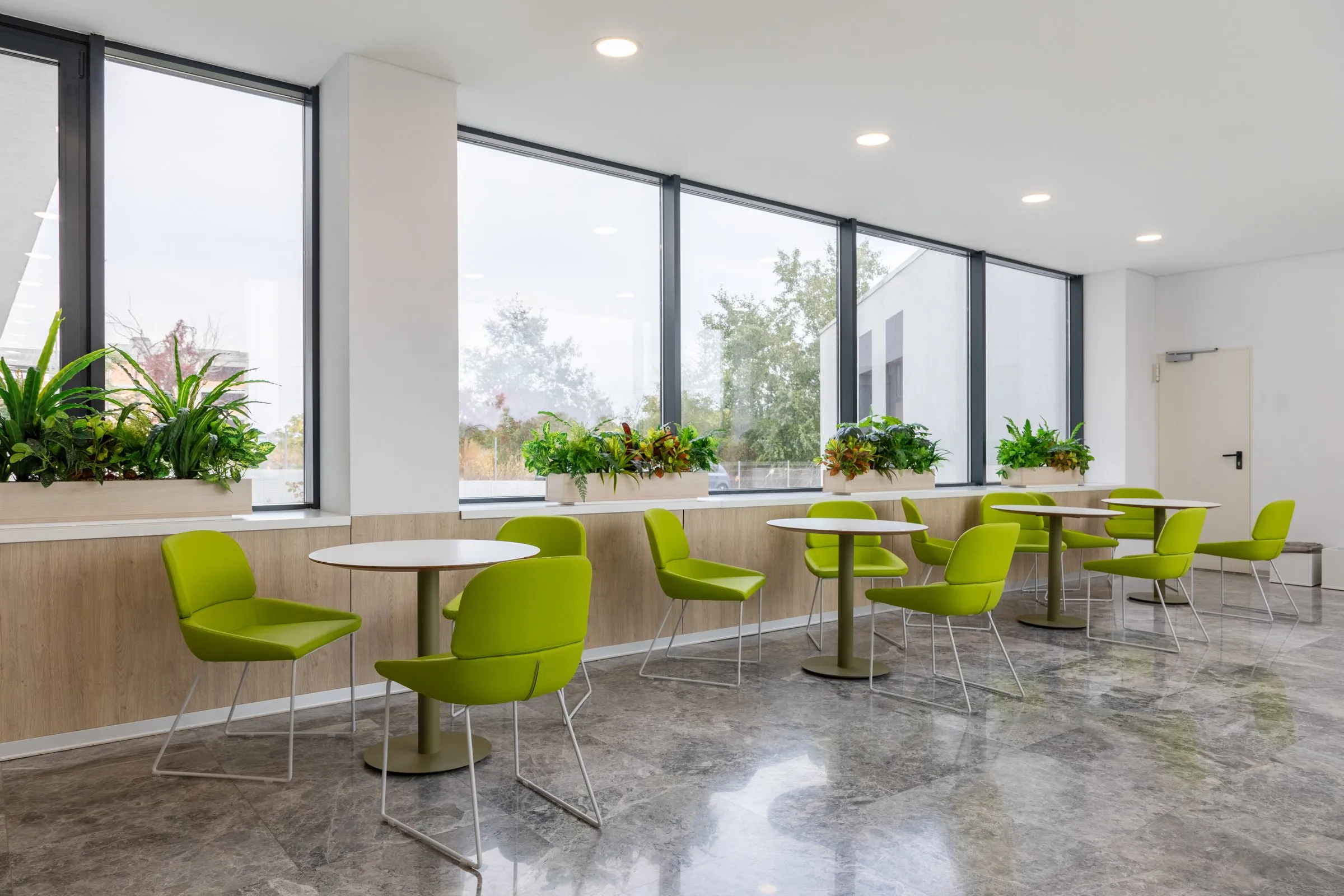
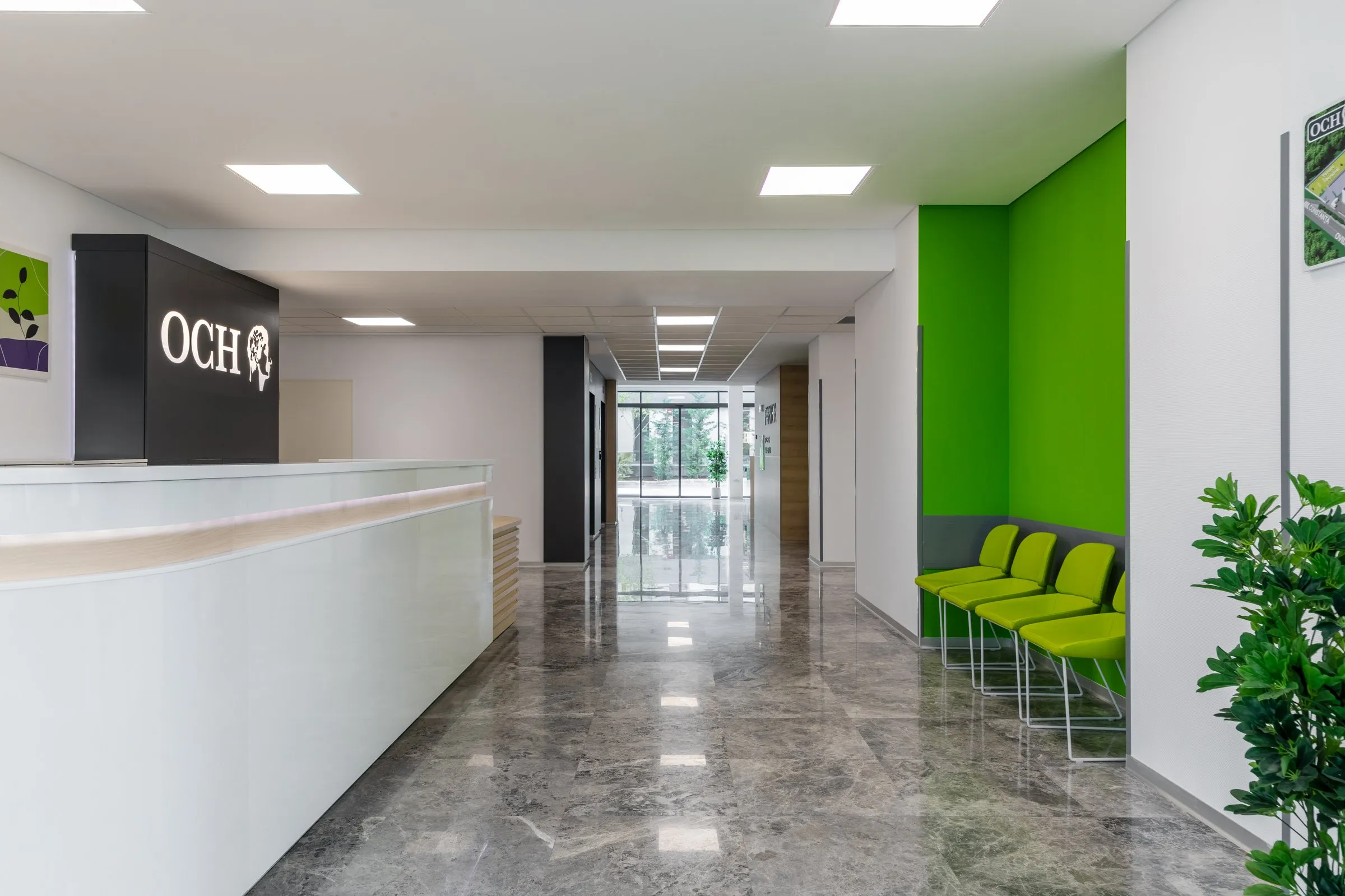
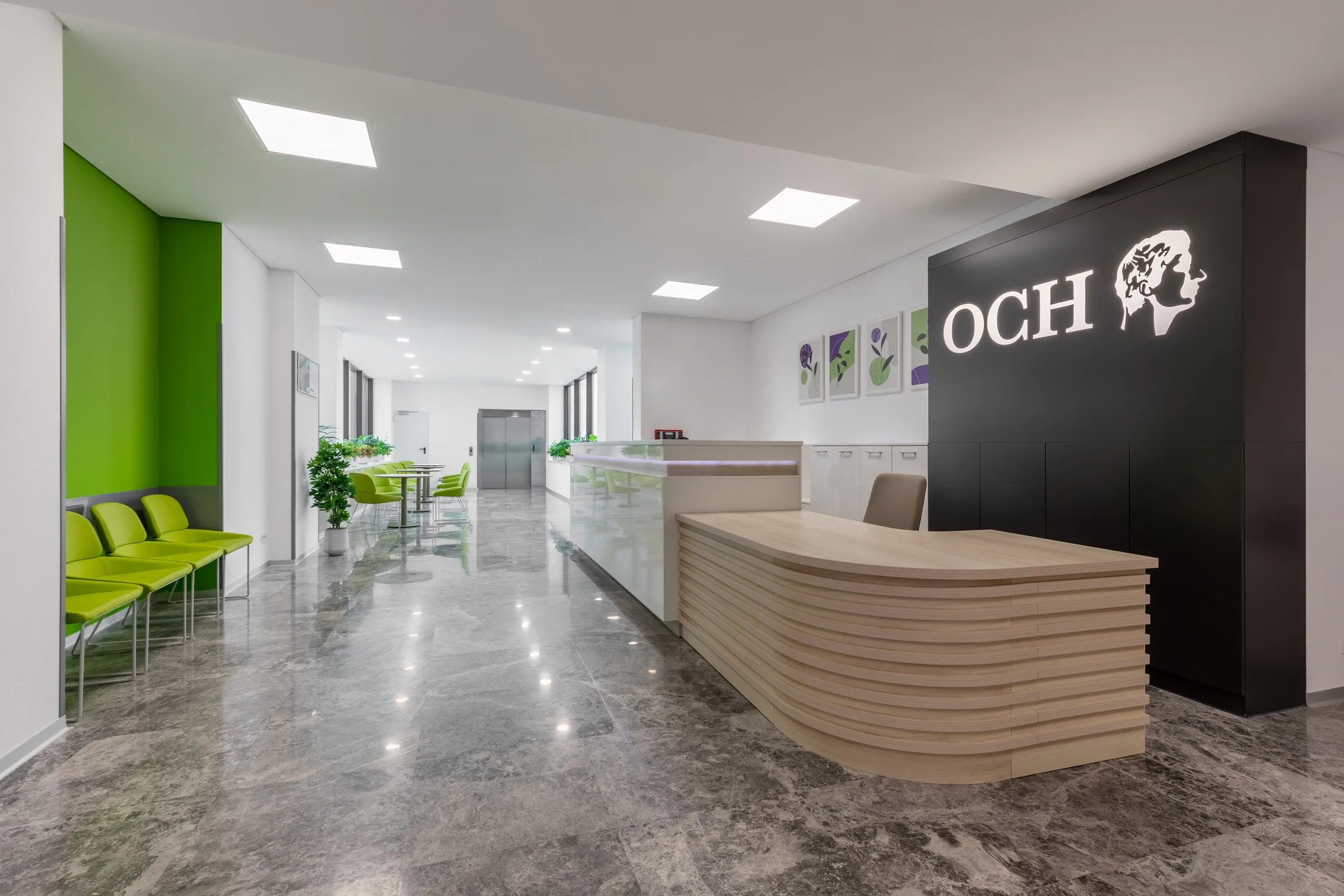
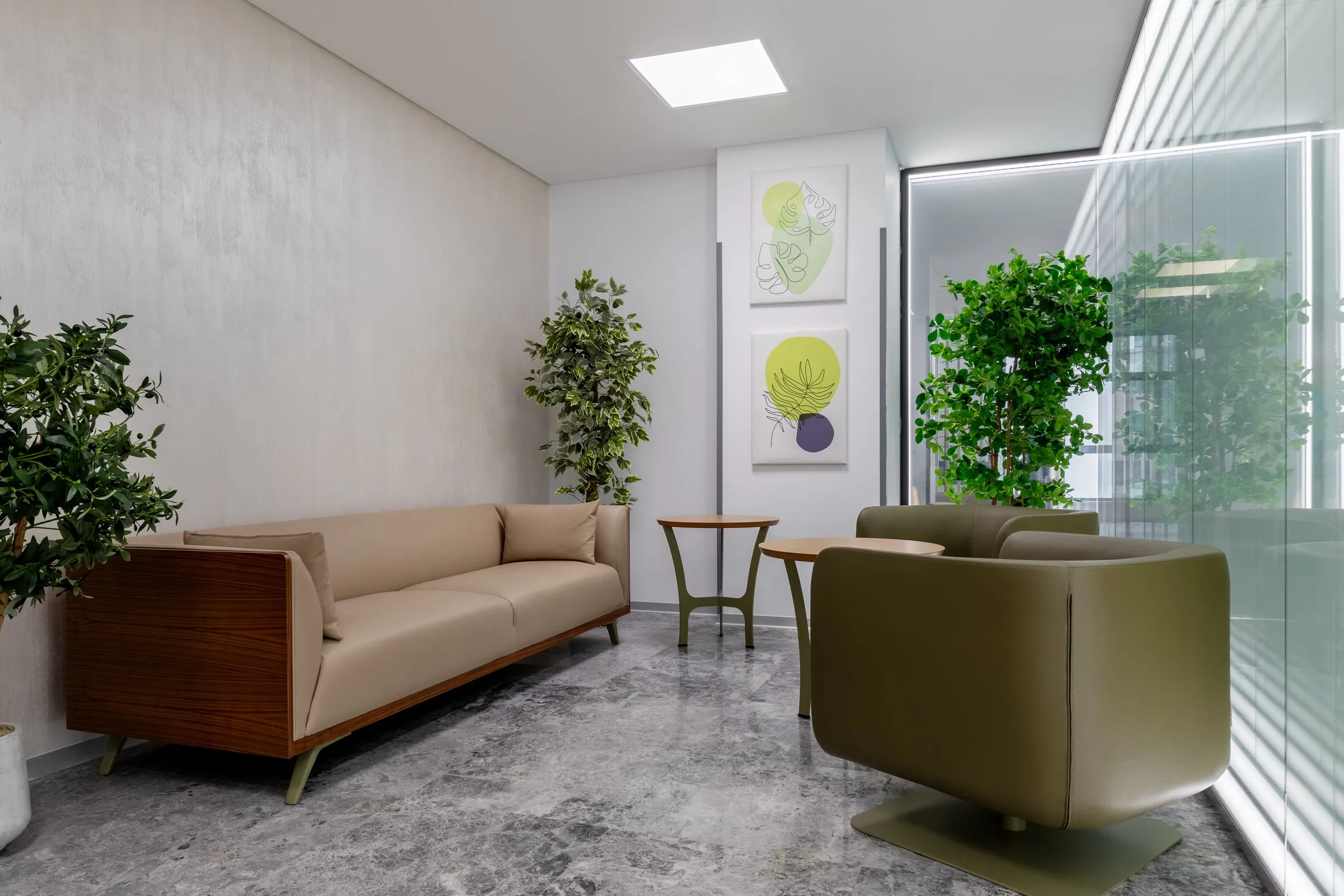
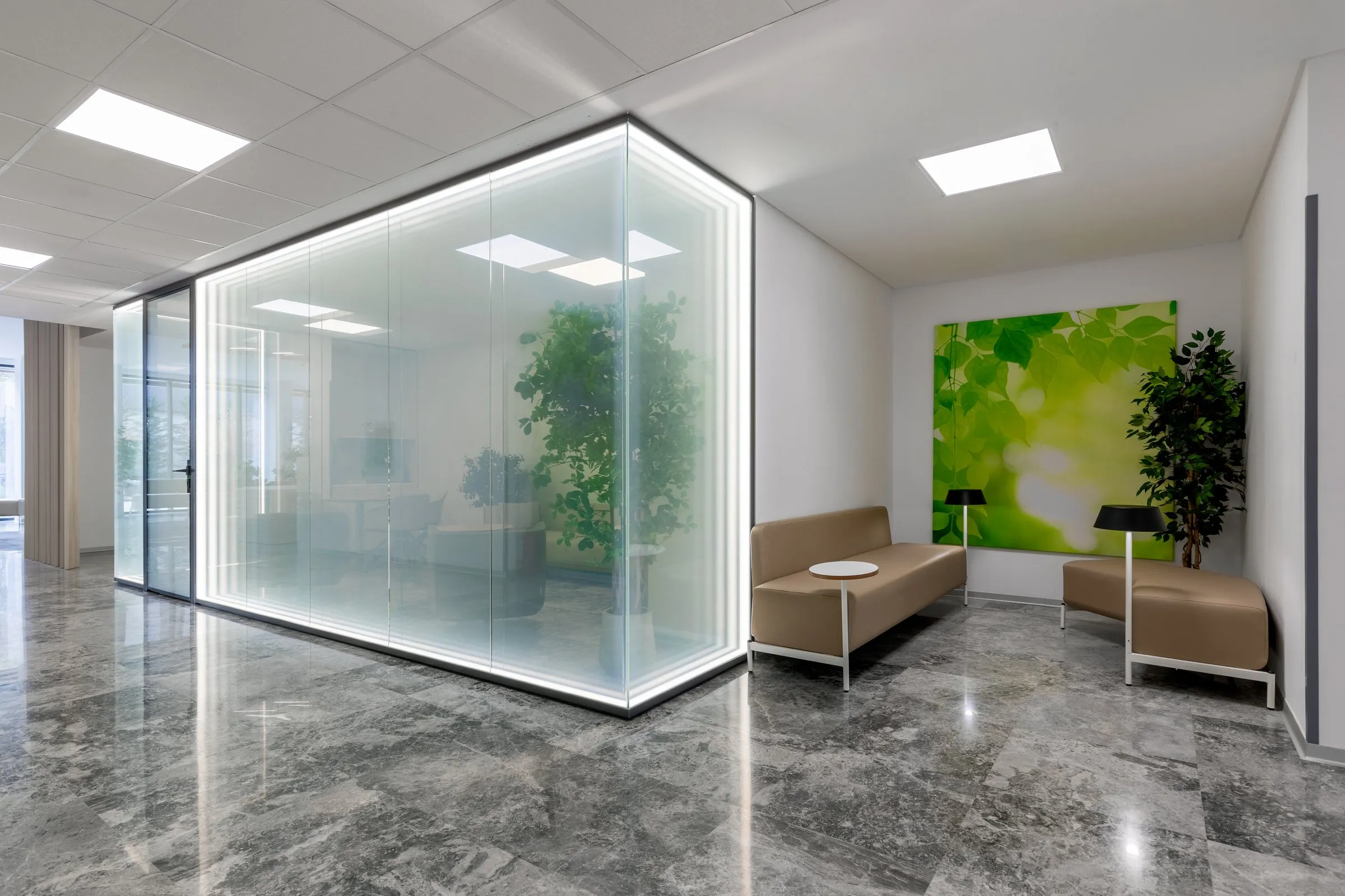
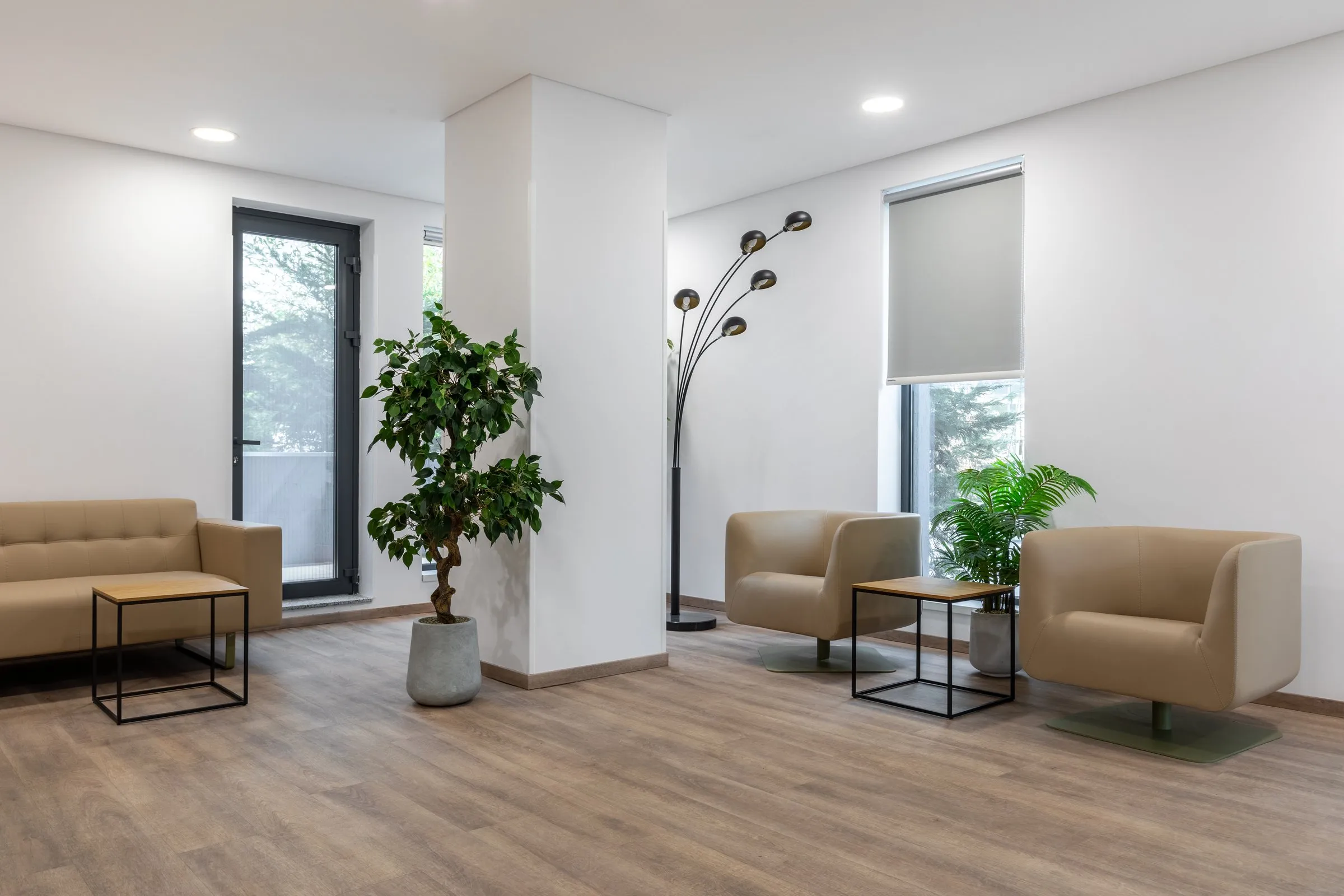
The reception and waiting areas are conceived as hospitality-inspired spaces rather than traditional clinical environments. Large glazed façades maximize natural daylight and visually connect the interior with landscaped exterior areas. Warm wood textures, natural stone flooring, integrated greenery and soft upholstered furniture create a welcoming and comfortable atmosphere. The use of plants and organic forms contributes to a more relaxing environment, while also improving the spatial perception of the public areas.
Lighting plays a key role throughout the project. Public spaces benefit from abundant natural light, complemented by integrated architectural lighting that enhances the ceiling compositions and material textures. Decorative wooden ceiling elements introduce warmth and rhythm while also contributing to acoustic comfort. Indirect lighting and illuminated glass details create a refined and contemporary visual identity.
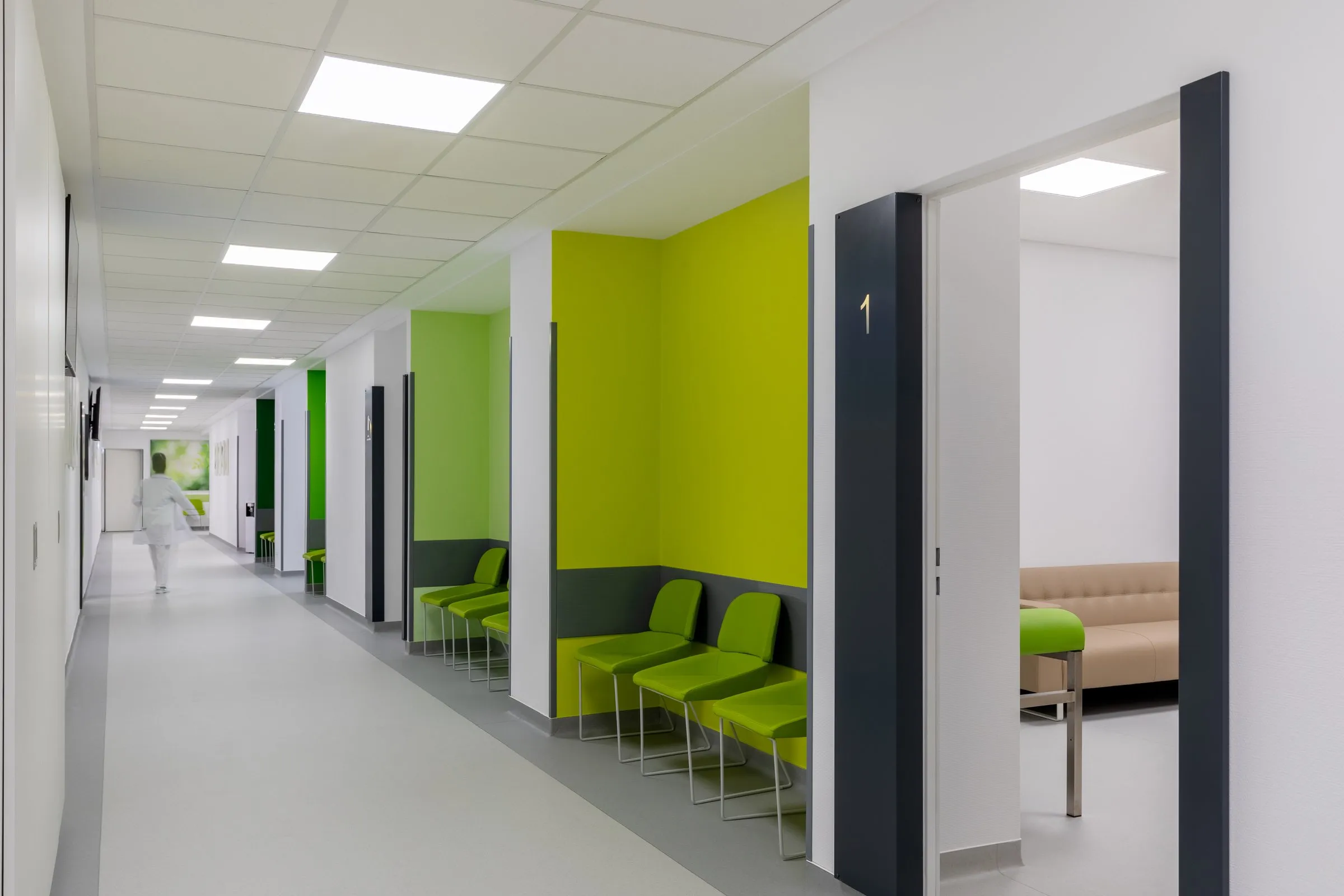
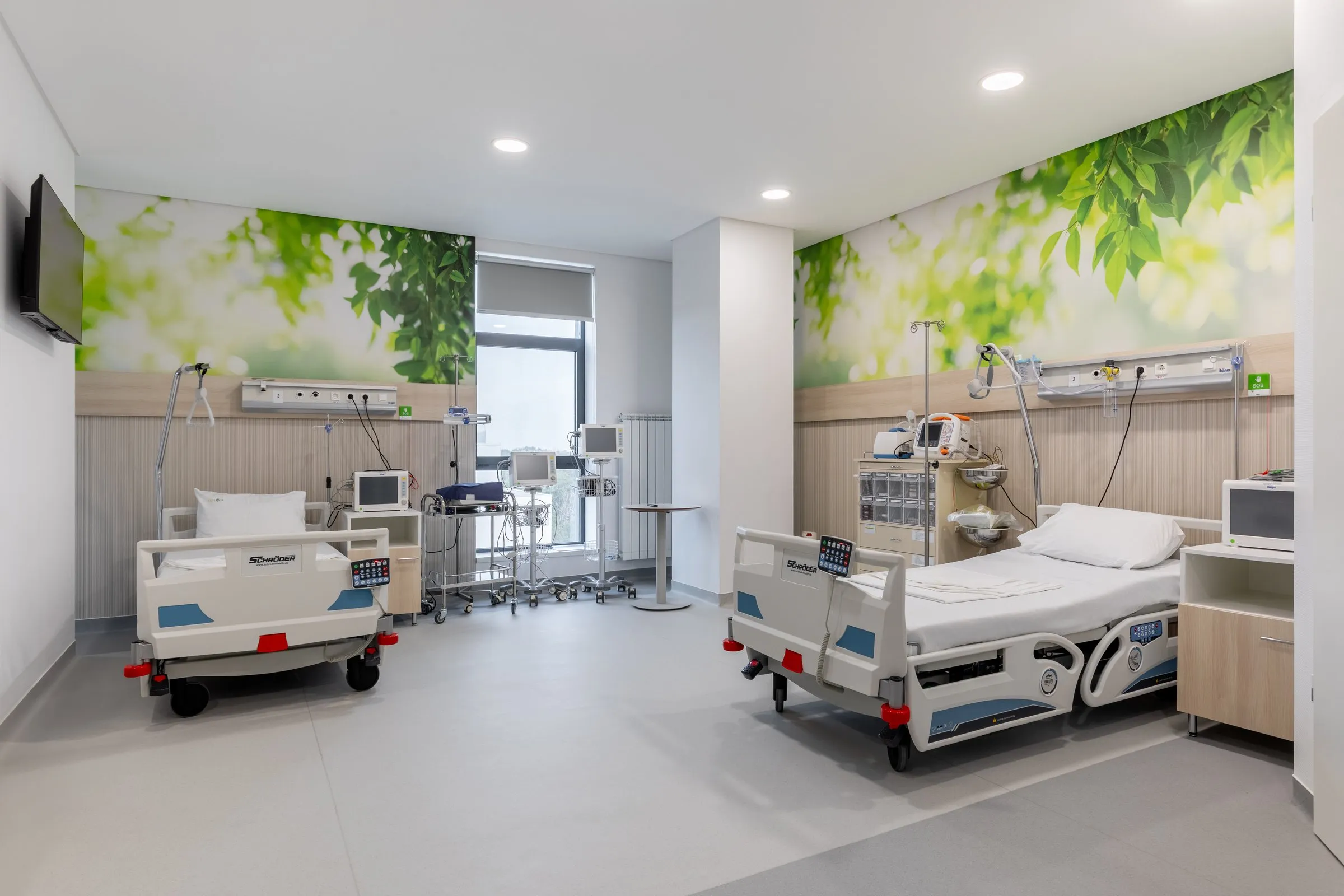
In patient rooms and treatment areas, the design prioritizes functionality, hygiene and comfort. The spaces are organized with clear medical logic while maintaining a warm and non-institutional appearance. Neutral finishes, wood accents and nature-inspired graphics soften the technical character of the medical environment and create a more positive emotional experience for patients and visitors. Large windows ensure access to daylight wherever possible, while integrated medical equipment and technical systems are discreetly incorporated into the architectural design.
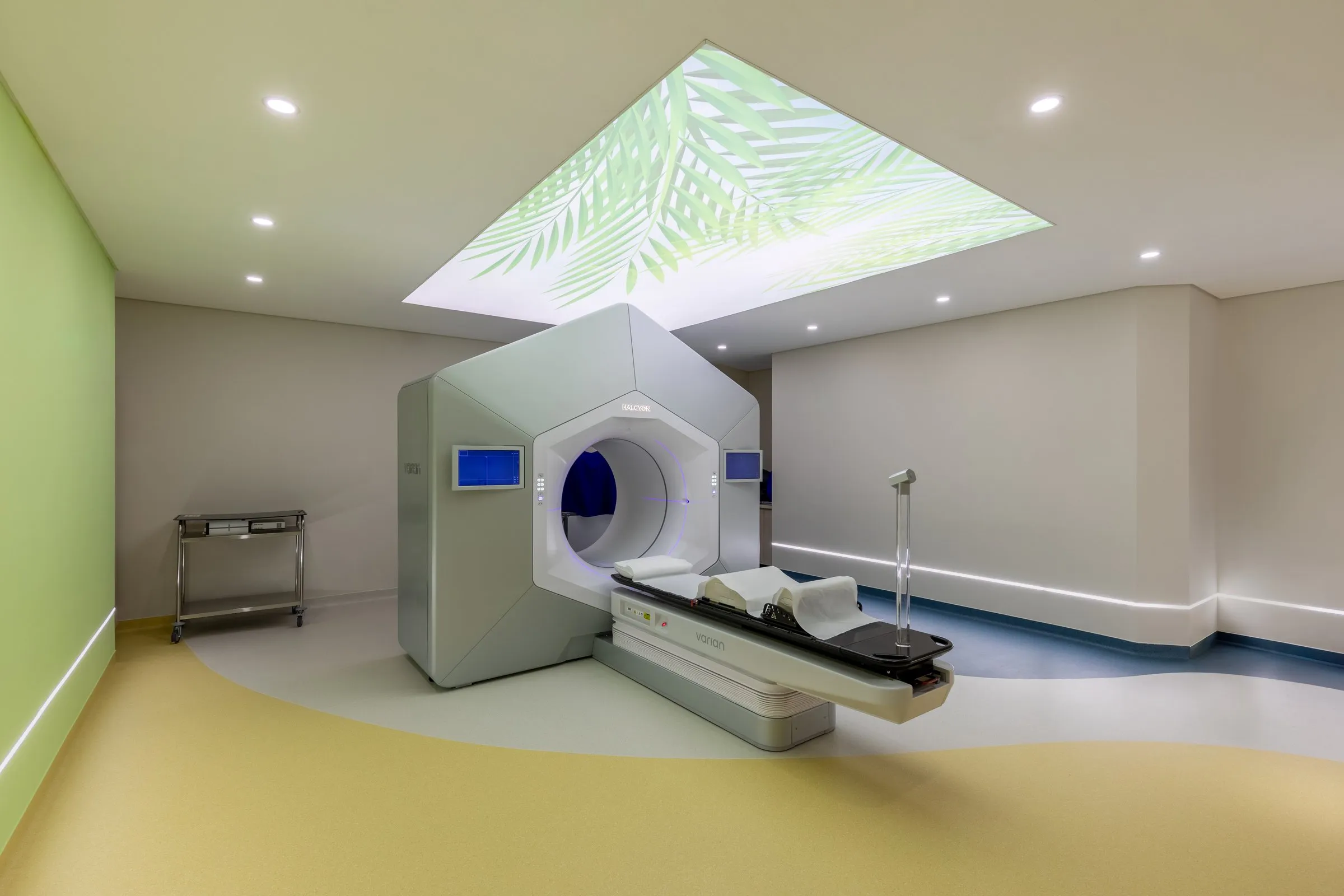
Highly specialized medical spaces, such as imaging and intervention rooms, were designed to meet strict technical and operational requirements while still maintaining a calm and controlled atmosphere. In several areas, nature-inspired illuminated ceilings and graphic elements were introduced to reduce patient anxiety and create visual distraction during medical procedures. The integration of advanced medical technology was carefully coordinated with the architectural concept to maintain spatial clarity and visual coherence.
The overall design approach for Ovidius Clinical Hospital reflects a balance between medical performance, operational efficiency and human-centered design. The project aims to transform the healthcare experience into one that feels more accessible, calming and empathetic, while supporting the highest standards of contemporary medical care.
Gallery